

20 easy fine motor activities for 3 year olds using things you already have, plus a simple 10-minute weekly plan to build hand strength for writing.
Quick answer
The best fine motor activities for 3 year olds strengthen small hand muscles through play: squeezing play dough, threading large beads, tearing paper, using tongs, peeling stickers, snipping paper with safety scissors and coloring with short crayons. Ten minutes a day is plenty, and these skills prepare your child for holding a pencil and cutting in preschool.
Fine motor skills are the small, precise movements of the fingers and hands. They are what your child uses to button a coat, open a snack bag, hold a crayon and, later, write their name.
At 3, these skills are growing fast. You do not need special equipment to help. Here are 20 easy fine motor activities using things you already have at home.
Why fine motor skills matter at age 3
Before a child can control a pencil, they need strong fingers, a stable wrist and good hand-eye coordination. Three year olds build these through squeezing, pinching, pulling and threading. Children who get plenty of this practice often find tracing, cutting and early writing much easier in preschool and kindergarten.
Squeezing and strengthening activities
1. Play dough. Rolling, squashing and pinching dough is the classic hand workout. Hide small beads inside for your child to dig out.
2. Spray bottle painting. Fill a small spray bottle with water and let your child “paint” a fence or outdoor wall.
3. Sponge squeeze. Move water from one bowl to another by soaking and squeezing a sponge.
4. Clothespin clip. Clip clothespins around the edge of a paper plate.
5. Tongs transfer. Move pom-poms from one bowl to another using kitchen tongs.
Pinching and threading activities
6. Threading large beads. Big wooden beads or pasta tubes on a shoelace.
7. Cereal necklace. Ring-shaped cereal on a piece of yarn. Edible fine motor practice.
8. Sticker peeling. Peeling stickers off a sheet is harder than it looks and great for the pincer grip.
9. Coin slot. Cut a slot in a container lid and post coins or buttons through it (always supervise small objects).
10. Pom-pom pick-up. Pick up small pom-poms using only thumb and pointer finger.
Paper activities
11. Tearing paper. Tear old magazines into strips and pieces to glue into a collage.
12. Crumpling balls. Crumple tissue paper into balls with one hand.
13. Coloring with short crayons. Broken crayons naturally encourage a finger grip instead of a fist.
14. Dot-to-dot puzzles. Simple puzzles with 10 or so dots practice pencil control and number order together.
15. Tracing lines. Straight lines, then curves and zigzags, traced with a thick crayon.
Ready-made fine motor pages
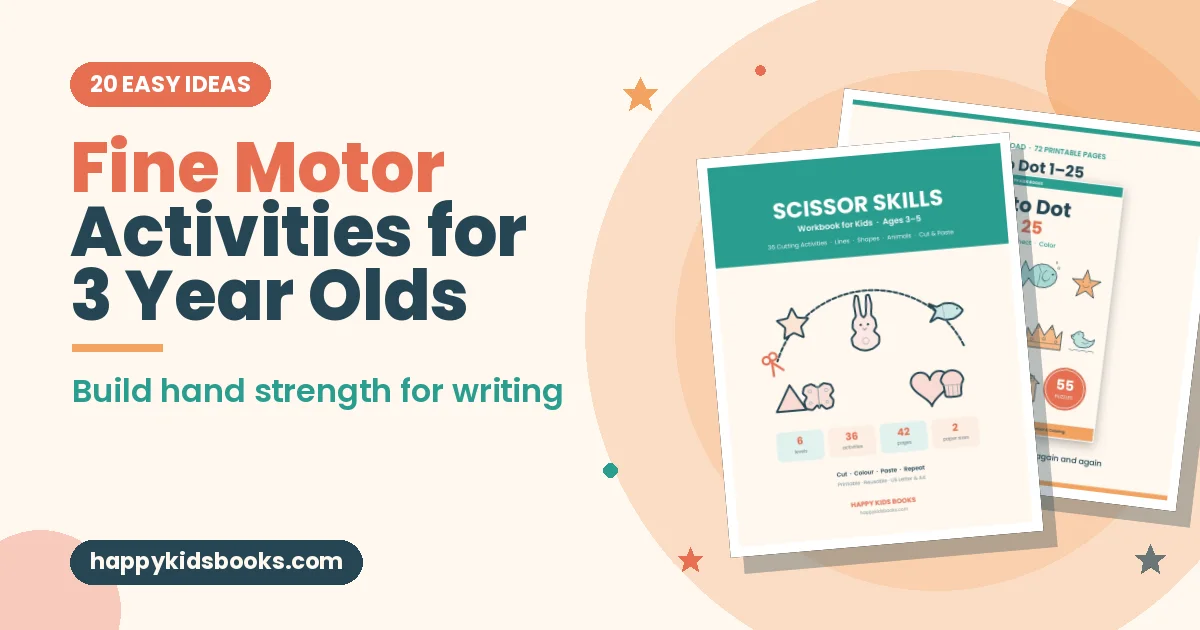
Our Scissor Skills Workbook (ages 3 to 5) builds cutting step by step across six levels, and the Dot to Dot 1-25 Workbook starts with easy 10-dot puzzles. Print a page whenever you need ten calm minutes.
Cutting activities
16. Snip paper strips. Cut card stock into narrow strips that can be snipped in one cut. Instant success.
17. Fringe cutting. Snip all along the edge of a paper to make grass or a lion’s mane.
18. Play dough snakes. Roll long snakes and cut them into pieces with safety scissors.
For the right grip and the order to teach cutting, see our guide on how to teach a 3 year old to use scissors.
Everyday life activities
19. Buttons and zips. Practice on a big-buttoned coat laid flat on the floor.
20. Helping in the kitchen. Stirring, pouring from a small jug, spreading with a butter knife and tearing lettuce.
A simple weekly plan
| Day | Activity (10 minutes) | Skill |
|---|---|---|
| Monday | Play dough with hidden beads | Hand strength |
| Tuesday | Threading cereal or beads | Pincer grip and coordination |
| Wednesday | Snipping paper strips | Scissor control |
| Thursday | Dot-to-dot or tracing page | Pencil control |
| Friday | Tongs and clothespin games | Hand strength |
Want seasonal ideas too? Try our fall fine motor activities, and check the fine motor skills checklist before kindergarten to see what comes next.
Frequently asked questions
What fine motor skills should a 3 year old have?
Many 3 year olds can string large beads, turn book pages one at a time, build a small block tower, use a fork, snip paper with safety scissors and hold a crayon with more finger control. Skills vary a lot at this age.
How can I improve my 3 year old’s fine motor skills?
Offer short daily play that involves squeezing, pinching and threading: play dough, stickers, beads, tongs, tearing paper and coloring. About 10 minutes a day is enough.
Should a 3 year old be able to use scissors?
Many 3 year olds can snip paper with child-safe scissors, and some can cut forward along a straight line by about 3 and a half. Start with snipping strips before cutting lines.
How should a 3 year old hold a crayon?
Many 3 year olds still use a whole-hand grip, and that is normal. Short or broken crayons gently encourage a finger-and-thumb grip, which most children use by around 4.
Are worksheets good for fine motor skills at 3?
Simple pages like tracing, coloring, dot-to-dot and cutting strips are helpful when kept short and fun. Mix them with hands-on play like play dough and threading.
Pick one activity today
Grab a bowl of cereal, a piece of yarn and ten minutes. Fine motor skills are built in small, playful moments like this, one bead at a time.
Get new printables in your inbox
Join other parents getting new printable pages, freebies and simple at-home learning tips. No spam, unsubscribe anytime.