
12 easy fall fine motor activities for preschoolers using leaves, acorns and pumpkins. Build hand strength for cutting and writing in 10 minutes a day.
Quick answer
Good fall fine motor activities for preschoolers include tearing leaves for a collage, moving acorns with tongs, cutting paper leaf fringe, lacing paper apples, and clipping clothespins onto paper pumpkins. Aim for 5 to 10 minutes a day. These small hand movements build the strength and control your child needs for cutting and writing in kindergarten.
Fall is the easiest season of the year for fine motor practice. The materials are free and all over your backyard: leaves, acorns, pinecones and pumpkin seeds. Kids want to touch all of it anyway, so you might as well turn it into practice.
Fine motor skills are the small movements of the hands and fingers. They are what your child uses to hold a pencil, cut with scissors, zip a coat and open a lunchbox. Preschool is when these skills grow the fastest, and a few minutes of play each day makes a real difference by kindergarten.
Why fine motor skills matter so much before kindergarten
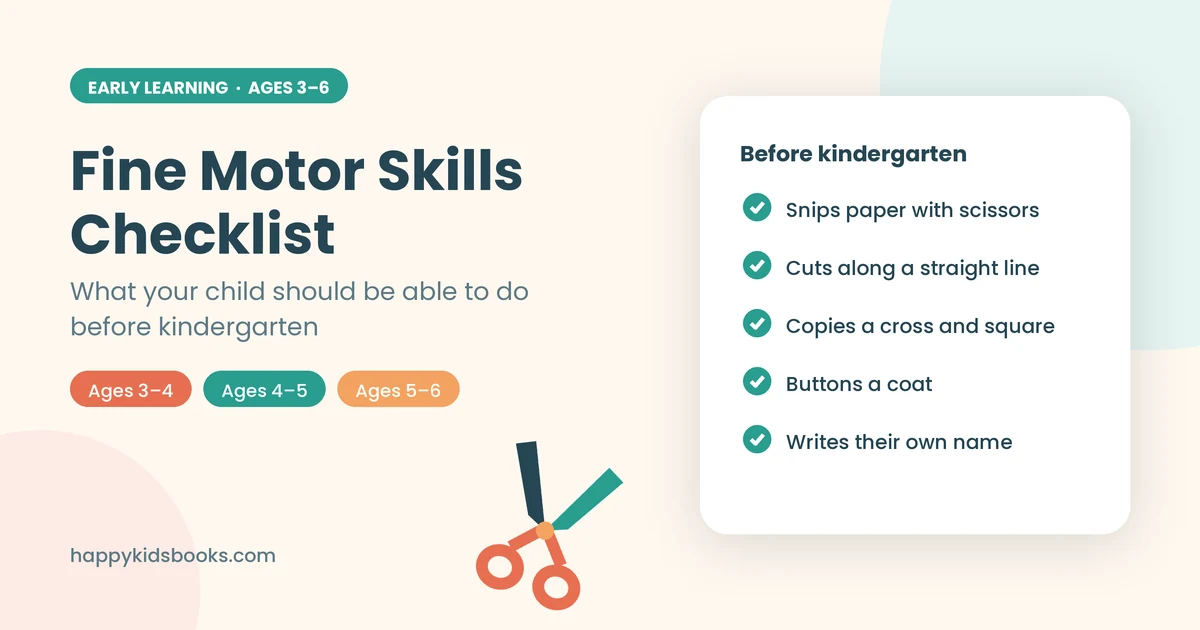
Parents often focus on letters and numbers, but teachers frequently say fine motor strength is the piece children are missing most. A child who tires quickly holding a pencil will struggle to write, even if they know all their letters. Our fine motor skills checklist shows what most children can do before kindergarten starts.
The good news is that these skills grow through play, not drills. Here are twelve fall activities that work.
12 fall fine motor activities for preschoolers
1. Torn leaf collage
Collect dry leaves and let your child tear them into small pieces, then glue them onto paper. Tearing uses both hands in different ways, which is great practice for later cutting.
2. Acorn transfer with tongs
Put acorns in one bowl and have your child move them to another with kitchen tongs or a clothespin. This builds the pinching strength used in a pencil grip. Supervise closely, as acorns are small.
3. Cut a paper leaf fringe
Draw a big leaf on colored paper and have your child snip all around the edge. Short snips are the very first cutting skill, and they are perfect for beginners.
4. Clothespin pumpkins
Cut an orange paper pumpkin and let your child clip clothespins all around it. Squeezing a clothespin is one of the best hand-strengthening exercises for three- and four-year-olds.
5. Lacing paper apples
Punch holes around a paper apple and give your child a shoelace or yarn with tape on the end. Lacing trains both hands to work together.
6. Pumpkin seed sorting
After carving a pumpkin, wash and dry the seeds. Let your child pick them up one at a time and drop them into an egg carton. Picking up tiny things develops the pincer grasp. Only for children who no longer put things in their mouths.
7. Leaf rubbings
Place a leaf under thin paper and rub over it with the side of a crayon. Holding the crayon flat and pressing evenly builds control and hand strength.
8. Apple stamping
Cut an apple in half, dip it in paint and stamp it on paper. Holding and pressing the apple is great for younger preschoolers who are not ready for small tools yet.
9. Pinecone painting
Give your child a small brush and let them paint the tips of a pinecone. The tiny, careful movements are good preparation for writing.
10. Playdough pumpkins
Roll orange playdough into balls, squash them, and press lines into them with a craft stick. Rolling and squashing strengthen the whole hand.
11. Sticker leaf lines
Draw a wavy line on paper and have your child place small stickers along it. Peeling stickers is surprisingly hard work for little fingers.
12. Fall dot-to-dots
Connecting the dots practices a controlled pencil line and number order at the same time. If you are wondering whether your child is ready, see what age a child can do dot-to-dots.
Keep the practice going indoors
When it rains, printable pages give you the same practice with zero prep. Our Scissor Skills Workbook builds cutting in six easy levels for ages 3 to 5.
How to fit fine motor practice into a busy week
- Keep it to 5 to 10 minutes. Little hands tire quickly. Stop before your child gets frustrated.
- Collect materials on walks. A bag of leaves and acorns from one walk covers a week of activities.
- Pick one activity per day. Rotate through the list so it always feels new.
- Use printables on rainy days. The Scissor Skills Workbook and the Dot to Dot 1-25 Workbook give you ready-made practice when you cannot go outside.
If cutting is the skill your child finds hardest, our step-by-step guide on teaching a 3-year-old to use scissors explains what to try first.
Frequently asked questions
What are fine motor skills in preschool?
Fine motor skills are small movements of the hands and fingers, like pinching, cutting, drawing and buttoning. They are the base for handwriting.
How often should my preschooler practice fine motor activities?
A few minutes every day works better than a long session once a week. Short, regular practice builds strength steadily.
Are these activities safe for toddlers?
Some are not. Acorns, seeds and small stickers are choking hazards for children who still put things in their mouths. Always supervise and choose larger items for younger children.
What if my child does not want to do the activity?
Try again another day or pick a different one. Fine motor practice should feel like play. Forcing it usually makes children avoid it.
When should I worry about my child’s fine motor skills?
If your child avoids drawing, cutting and building altogether, or struggles noticeably more than children of the same age, mention it to your pediatrician or preschool teacher.
Small hands, big progress
You do not need special toys to build fine motor skills. A walk outside, a few leaves and ten minutes at the kitchen table are enough. Do a little every day this fall, and your child will head into winter with stronger, steadier hands.
Get new printables in your inbox
Join other parents getting new printable pages, freebies and simple at-home learning tips. No spam, unsubscribe anytime.