
The full kindergarten sight word list (40 pre-primer and 52 primer Dolch words), a 10-minute weekly practice routine, and what to do if your child struggles.
Quick answer
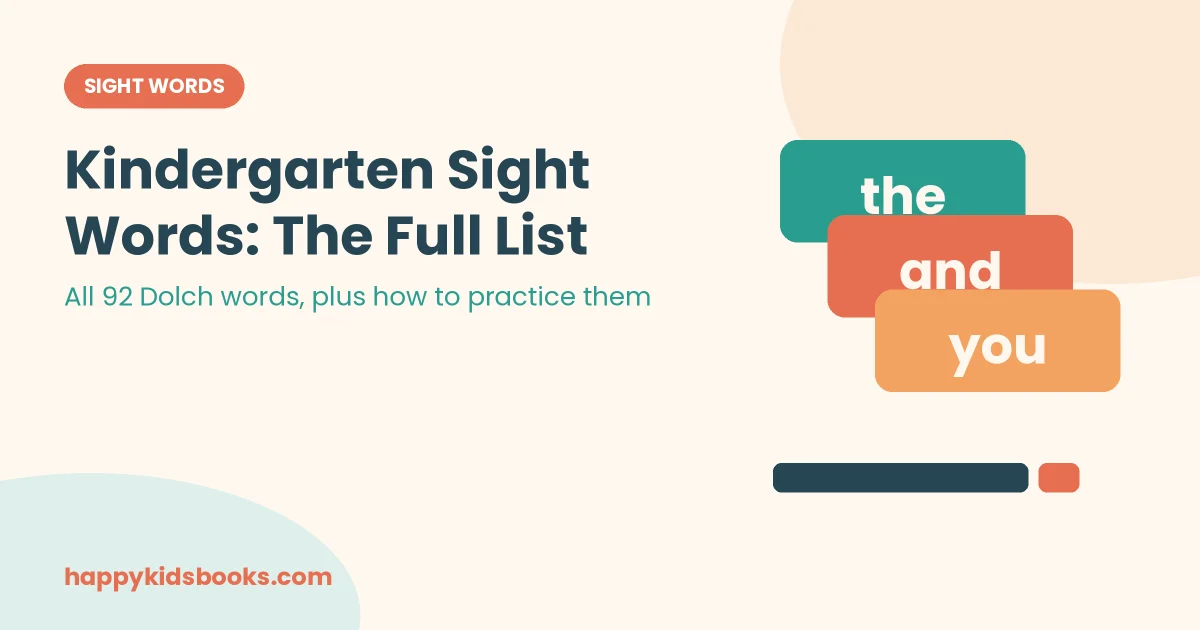
Most US kindergartens teach the 40 Dolch pre-primer words first, then the 52 primer words, which is 92 words in total. A child leaving kindergarten can usually read 30 to 75 of them by sight. Practice 3 to 5 words a week using see it, say it, trace it, use it, and review old words every few days.
Sight words are the words that show up again and again in children’s books: the, and, is, you, said. Some of them do not sound the way they look, so children learn to recognize them instantly instead of sounding them out every time. Once a child knows a good handful, reading gets much smoother and much less frustrating.
This guide gives you the full kindergarten word list, a weekly practice routine that takes about ten minutes, and realistic expectations for where your child should be.
The Dolch kindergarten sight word list
Most US schools use the Dolch lists or the similar Fry list. Kindergarten usually covers the pre-primer and primer sets.
Pre-primer (40 words, taught first)
a, and, away, big, blue, can, come, down, find, for, funny, go, help, here, I, in, is, it, jump, little, look, make, me, my, not, one, play, red, run, said, see, the, three, to, two, up, we, where, yellow, you
Primer (52 words, taught next)
all, am, are, at, ate, be, black, brown, but, came, did, do, eat, four, get, good, have, he, into, like, must, new, no, now, on, our, out, please, pretty, ran, ride, saw, say, she, so, soon, that, there, they, this, too, under, want, was, well, went, what, white, who, will, with, yes
That is 92 words in total. Your child does not need all of them by the end of kindergarten. For a realistic target by age, see our guide to how many sight words a child should know.
A 10-minute weekly routine
Pick 3 to 5 new words on Monday and work through the same four steps each day. Short and steady beats long and rare.
- See it. Show the word and read it aloud. Do not ask your child to sound it out yet.
- Say it. Your child says the word three times while looking at it.
- Trace it. Tracing links the shape of the word to the sound. This is where most of the memory work happens.
- Use it. Find the word in a book, or say a silly sentence with it. Words stick when they mean something.
Then review. Every Friday, go back through the words from the past three weeks. Old words fade fast without review, and this one habit makes the biggest difference.
Practice pages, already done for you
The Safari Sight Words Workbook turns this exact routine into safari-themed pages: find the word, trace it, write it and use it. Print at home, ages 5 to 9.
Five ways to practice that do not feel like homework
- Word hunt. Write this week’s words on sticky notes and hide them around a room. Your child reads each one as they find it.
- Hopscotch words. Chalk the words on the driveway. Your child reads the word before jumping on it.
- Rainbow writing. Trace the same word three times in three different colors.
- Silly voices. Read the word as a robot, a mouse, then a giant. Laughing helps memory more than repeating does.
- Book spotting. While reading together, let your child point out every word they know. Stop before they get tired.
Sight words are only half of reading
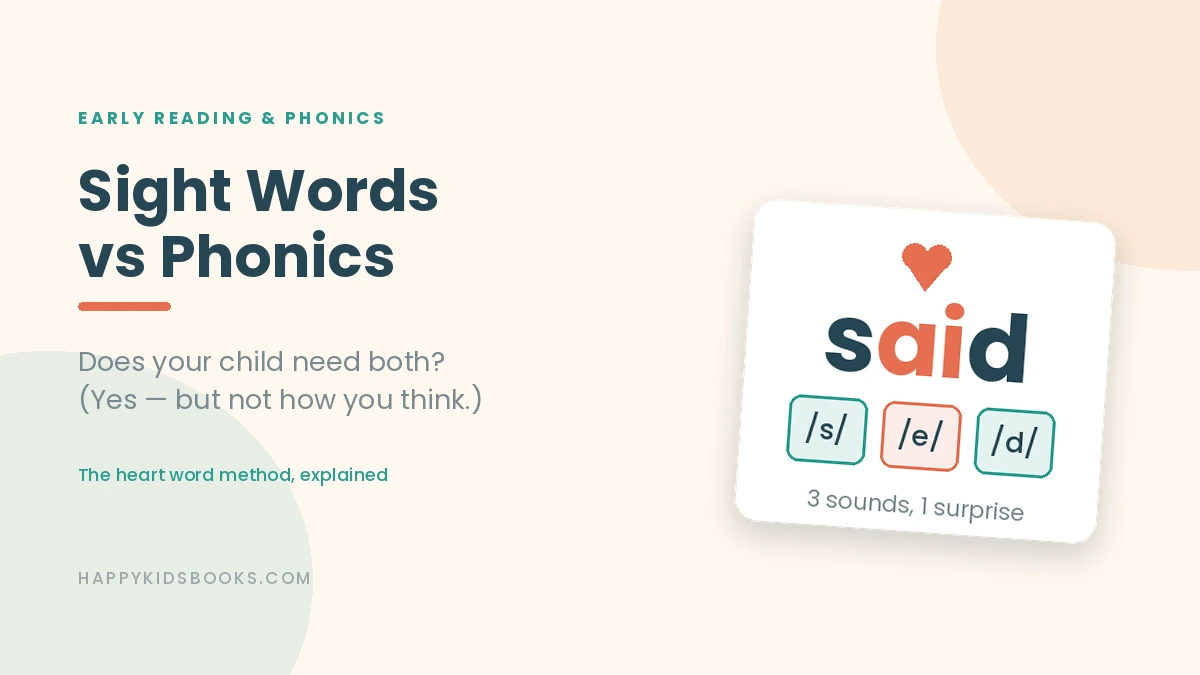
It is easy to think reading is just memorizing more words. It is not. Children also need phonics: matching letters to sounds and blending them into words. The strongest readers do both.
Once your child knows most letter sounds and a small set of sight words, they are ready for short decodable stories, where they can read almost every word themselves. Our Decodable Passages Pack covers grades K to 2 and follows the science of reading, and our explainer on what decodable passages are shows how they fit alongside sight words.
What if my child is struggling?
First, slow down. Three words learned well beat ten words half-learned. Then check these:
- Too many at once. Drop back to two or three words a week.
- No review. Old words need revisiting for weeks, not days.
- Tired child. After school is often the worst time. Try mornings or weekends.
- Weak letter sounds. If letter sounds are shaky, work on those first. Our kindergarten readiness checklist helps you spot the gap.
Frequently asked questions
How many sight words should a kindergartner know?
Schools often aim for 30 to 75 words by the end of kindergarten, but the range is wide and normal. Steady progress matters more than the exact number.
What is the difference between Dolch and Fry words?
Dolch lists are grouped by grade level and include 220 words plus 95 nouns. Fry lists are the 1,000 most common words in order of frequency. They overlap heavily, so either one works.
Should my child sound out sight words?
Many sight words can be partly sounded out, and that helps. The goal is instant recognition, not guessing from the picture.
At what age do children start sight words?
Most children start in kindergarten around age 5, though some preschools introduce a few words earlier. Letter sounds should come first.
How long does it take to learn a sight word?
Children often need to see a word 20 or more times before it sticks. That is why the weekly review matters so much.
Start with five words
Do not print the whole list and panic. Pick five words from the pre-primer set, practice them for ten minutes a day this week, and review them next week. That pace adds up to a confident reader by summer.
Get new printables in your inbox
Join other parents getting new printable pages, freebies and simple at-home learning tips. No spam, unsubscribe anytime.