
Easy, low-prep sight word games for kindergarten, plus a simple 10-minute weekly routine.
Quick answer
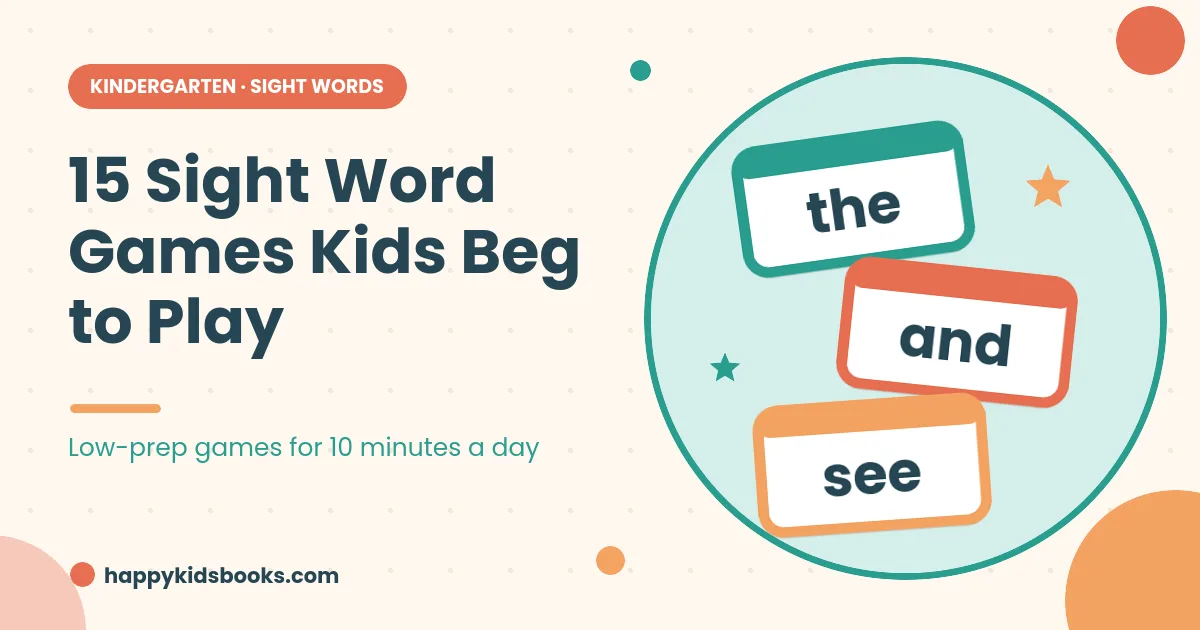
The best sight word games for kindergarten are short, active and repetitive: sight word Go Fish, a flashlight word hunt, jump-and-read, and memory match. Work on 3 new words at a time, mix in words your child already knows, and play for about 10 minutes a day. Always finish by reading the words in a real sentence.
Flashcards at the kitchen table work for about four minutes. Then come the wiggles, the sighs and the “I’m tiiired.”
The good news is that sight words stick through repetition, and games give you repetition without the drill. Your child reads the same word 20 times and only notices they are winning.
Why games work better than flashcard drills
Sight words (also called high-frequency words) are words like the, said and was that show up constantly in children’s books. Kids need to read them instantly so they can focus on the harder words around them.
Many teachers now use a “heart word” approach: sound out the regular parts of the word, and learn the tricky part “by heart.” In said, the s and d sound normal; the “ai” is the part to remember. Games give your child the dozens of quick, low-stress repetitions that make those tricky parts stick. You can read more about how this fits with phonics in sight words vs phonics.
Before you start: pick the right words
- Use your child’s school list if they have one. If not, start with the Dolch pre-primer and primer words. Our kindergarten sight words list has the full set.
- Three new words at a time. Add them to a pile of words your child already knows so every game has plenty of easy wins.
- Write big and clear. Use lowercase letters on index cards, since that is how words appear in books.
15 sight word games for kindergarten
Games that get them moving
1. Jump and read. Lay word cards on the floor like stepping stones. Your child reads each word as they jump on it. Miss a word and you jump back to the start together.
2. Flashlight hunt. Tape words to the walls, turn off the lights, and hand over a flashlight. Every word they find, they read. This one gets requested at bedtime for weeks.
3. Swat it. Spread cards on a table. Call out a word; your child swats the right one with a fly swatter. Then swap so your child calls the words and you swat, sometimes wrongly on purpose.
4. Sight word bowling. Tape words to plastic cups or empty bottles. Knock them down with a soft ball and read every word that falls.
5. Word hopscotch. Chalk a hopscotch grid with a word in each square. Read each word on the way up and back.
Card games
6. Sight word Go Fish. Make two cards for each word. Play Go Fish, but your child has to read the word to ask for it: “Do you have said?”
7. Memory match. The same pairs, face down. Flip two, read both, keep them if they match. Start with 6 pairs and build up.
8. Snap. Deal the cards and flip them one at a time. When two matching words appear, the first to read the word aloud and slap the pile wins it.
9. Sight word bingo. Draw a 3 by 3 grid with nine words. Call words out and cover them with cereal. Three in a row wins, and so does eating the cereal.
Hands-on games
10. Build it. Your child builds the word with magnetic letters while looking at the card, then without looking. Great for the tricky “heart” parts.
11. Rainbow write. Write a word in pencil, then trace over it three times in three different crayons, saying each letter as they go.
12. Play dough stamp. Flatten a slab of dough and press letter stamps or magnetic letters into it to spell the word.
Two-minute games for busy days
13. The password. Tape one word to your child’s bedroom door. To go through, they have to read the password. Change it every day.
14. Mystery bag. Drop word cards into a bag. Your child pulls one out, reads it, and uses it in a silly sentence.
15. Sentence scramble. Write a short sentence on a strip of paper (“I can see the dog”), cut it into words, and let your child put it back in order and read it.
Sight words, safari style
The Safari Sight Words Workbook turns high-frequency words into animal-themed tracing, reading and puzzle pages for ages 5 to 9. It pairs perfectly with the games above.
A simple weekly sight word routine
You do not need to plan a new game every day. This rhythm takes about 10 minutes a day and covers everything:
| Day | What to do | Example game |
|---|---|---|
| Monday | Introduce 3 new words | Build it, rainbow write |
| Tuesday | Card game with new and known words | Go Fish or memory match |
| Wednesday | Get moving | Jump and read, flashlight hunt |
| Thursday | Read the words in sentences | Sentence scramble, a short book |
| Friday | Review the whole pile | Bingo or bowling |
How do you know it is working?
A word is truly learned when your child reads it instantly, without sounding it out, in a book, not just on a card. If they read was on a flashcard but stumble on it in a story, keep it in the game pile a little longer.
Wondering how many words to aim for? Our age-by-age guide on how many sight words your child should know has realistic numbers.
Frequently asked questions
How many sight words should a kindergartner learn a day?
Most kindergartners do well with about 3 new words at a time, practiced for a few days before adding more. Mixing new words with familiar ones keeps practice successful.
What if my child keeps forgetting sight words?
Shrink the pile to 3 or 4 words, play the same game for several days in a row, and point out the tricky part of each word. Forgetting usually means too many words at once, not a problem with your child.
Should kids learn sight words or phonics first?
Both, side by side. Phonics lets children sound out most words, while a small set of high-frequency words helps them read simple books early. Learning the sounds of letters first makes sight words easier.
How long should sight word practice last?
About 10 minutes a day is enough for most 5- and 6-year-olds. Short daily practice beats a long session once a week.
What are the best sight word games for kids who cannot sit still?
Movement games work best: jump and read, flashlight hunt, swat it, sight word bowling and hopscotch. Your child reads while they move, which is often when they focus best.
Pick one game tonight
Write three words on cards, turn off the lights, and grab a flashlight. Ten minutes of play will do more than half an hour of drilling, and your child will ask to play again tomorrow.
Get new printables in your inbox
Join other parents getting new printable pages, freebies and simple at-home learning tips. No spam, unsubscribe anytime.