
The best printable kindergarten workbooks for sight words, reading, cutting and counting, plus a simple 15-minute home routine. Print at home and reuse.
Quick answer
The best printable kindergarten workbooks cover four skills: letters and sounds, sight words, early math, and fine motor control (cutting and pencil work). Pick one workbook per skill, keep sessions to 10 to 15 minutes, and print only the pages you need that week. A kindergarten readiness workbook is the best single place to start.
Kindergarten teachers send home a lot of paper, but most of it is a snapshot, not a plan. If you want to help at home, you need something more organized than a random stack of free worksheets from the internet. You need a few good workbooks that match what your child is actually learning this year.
This guide walks you through what a kindergarten workbook should cover, how to tell a good one from a filler one, and which printable workbooks we recommend for each skill. Everything here is printable at home, so you can reprint a page as many times as your child needs it.
What should a kindergarten workbook cover?
Most US kindergarten classrooms follow the Common Core standards or something close to them. That gives you a clear checklist. By the end of kindergarten, children are usually working on:
- Letters and sounds: naming all 26 letters, upper and lower case, and knowing the main sound each one makes.
- Sight words: reading a set of common high-frequency words (like the, and, is, you) by sight. Many schools use the Dolch pre-primer and primer lists.
- Early reading: blending simple words like cat and sit and reading short decodable sentences.
- Numbers: counting to 100 by ones and tens, writing numbers to 20, and comparing small groups.
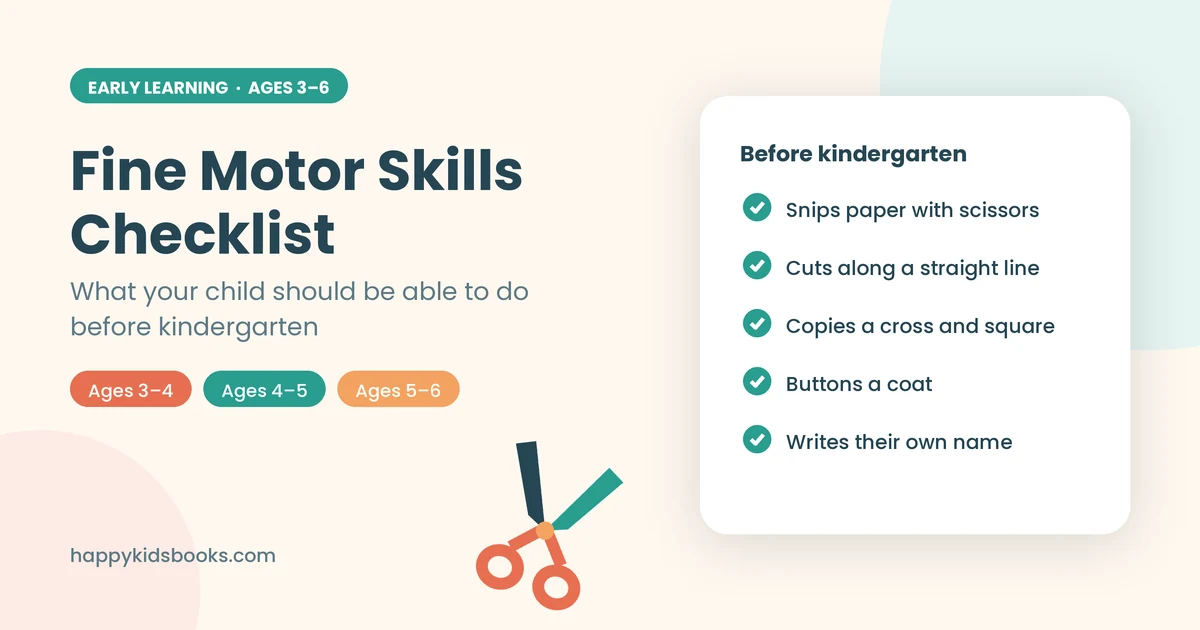
- Fine motor skills: holding a pencil, cutting along a line, and tracing shapes with control.
A good workbook does not try to do all of this at once. It picks one or two skills and builds them step by step.
How to tell a good printable workbook from a filler one
Free worksheet packs are everywhere, and many of them are fine for a rainy afternoon. For steady progress, look for these five things before you buy or print anything:
- It builds in levels. The first pages should be easy wins and the last pages should be a real stretch. Random difficulty is a sign the pages were collected, not designed.
- It has clear, kid-friendly fonts. Early readers need a simple “a” and “g” that match how they are taught to write. Fancy fonts slow them down.
- Pages have one job each. A page with three different activities and six instructions is too busy for a five-year-old.
- It matches school vocabulary. Look for Dolch or Fry sight words, not a random word list.
- You can reprint it. The biggest advantage of a PDF is that the hard pages can be printed again until they click.
The best printable kindergarten workbooks, by skill
Here is how we would build a simple home practice kit for a kindergartner. You do not need all of these. Start with the one that matches the skill your child finds hardest.
1. Best all-in-one starter: Little Learner Kindergarten Readiness Workbook
If you only buy one workbook, make it a readiness book that touches every skill lightly. The Little Learner Kindergarten Readiness Workbook mixes tracing, letters, numbers, matching and coloring for ages 3 to 6. It works well in the fall of kindergarten, when you are still figuring out where your child needs help.
2. Best for sight words: Safari Sight Words Workbook
Sight words are the skill parents ask about most. The Safari Sight Words Workbook turns word practice into an animal adventure with tracing, finding and writing activities. It suits ages 5 to 9, so it grows with your child into first grade. Not sure how many words your child should know? Our age-by-age sight word checklist gives you realistic ranges.
3. Best for early reading: Decodable Passages Pack
Once your child knows most letter sounds, short decodable stories are the next step. The Decodable Passages Pack gives children stories that only use the sounds they have already learned, so they can read them on their own. It follows the science of reading and covers grades K to 2. If you are unsure whether your child is ready, read our guide to what decodable passages are.
4. Best for cutting: Scissor Skills Workbook
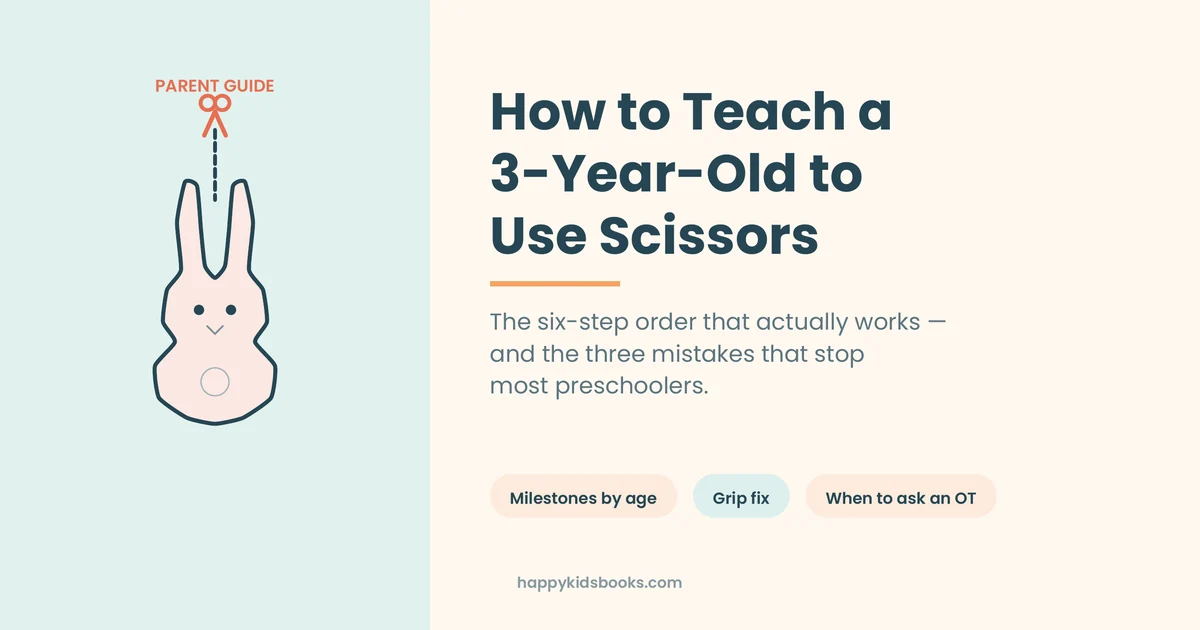
Cutting is one of the most overlooked kindergarten skills, and it has a big effect on handwriting. The Scissor Skills Workbook moves from simple snips to curves and shapes in six levels. It is designed for ages 3 to 5, which makes it perfect for a kindergartner who is still a little wobbly with scissors.
5. Best for counting and pencil control: Dot to Dot 1 to 25
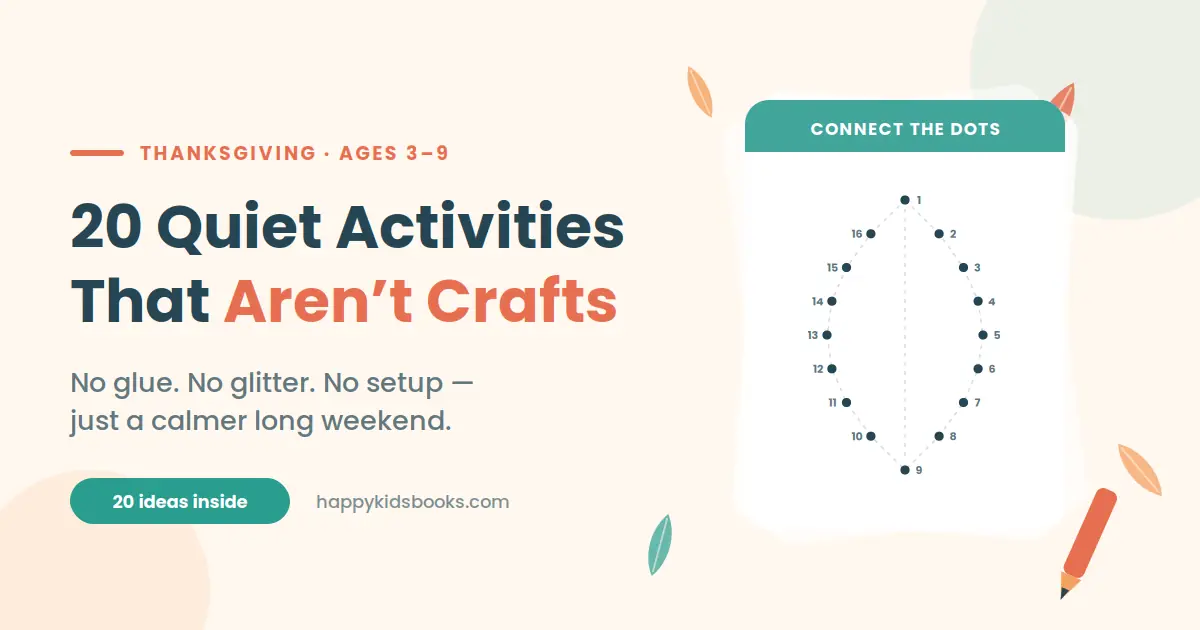
Dot-to-dot puzzles quietly practice two things at once: number order and a steady pencil line. The Dot to Dot 1-25 Printable Workbook has 55 connect-the-dots puzzles for ages 3 to 6, which is ideal for number practice without it feeling like math homework.
Not sure where to start?
Start with the readiness workbook. It shows you which skill needs the most help, then you can add a skill-specific book later.
A simple weekly routine that actually works
The best workbook in the world will not help if it sits in a drawer. What works for most families is a short, predictable routine:
- Keep it short. Ten to fifteen minutes is plenty for a five-year-old. Stop while it is still fun.
- Pick a fixed time. Right after a snack, before screen time, works for a lot of families.
- Rotate skills. Try sight words on Monday, cutting on Tuesday, a story on Wednesday, dot-to-dots on Thursday, and a free-choice page on Friday.
- Reprint the hard pages. If a page was tough, print it again next week. Doing it a second time is where the confidence comes from.
- Praise effort, not neatness. Wobbly lines are normal. Your child’s hands are still developing.
Printing tips for home
You do not need a fancy printer. A basic home inkjet on US Letter paper is fine. Choose “Fit to page” in your print settings, and print in black and white for tracing and cutting pages to save ink. For pages your child will reuse, slip them into a clear sheet protector and use a dry-erase marker.
If you want to know whether your child is on track overall, our kindergarten readiness checklist covers 50 skills across reading, math, fine motor and social development.
Frequently asked questions
Are printable workbooks as good as store-bought ones?
Often they are better for home practice, because you can reprint the hard pages as many times as you need. Store-bought books are one-and-done. We compare both in our guide on whether printable workbooks are worth it.
How many workbook pages should a kindergartner do a day?
One to three pages is enough. Short, regular practice beats a long weekend session every time.
What age are kindergarten workbooks for?
Most children start kindergarten at age 5 or 6. Readiness workbooks usually start at age 3 or 4 so you can prepare in the year before school.
Should my child do workbooks if their school already sends homework?
Only if they enjoy it or need extra help with one skill. Use a workbook to fill a specific gap, not to add more homework.
Do I need a color printer?
No. Every page works in black and white, and many kids enjoy coloring the pictures themselves.
The bottom line
You do not need a shelf full of books to help your kindergartner. Pick one workbook for the skill they find hardest, keep sessions short, and reprint the pages that need another go. A few focused minutes a day, done consistently, is what makes the difference.