
What kindergarten decodable passages should include, the phonics order to follow and a simple 5-day plan to use them at home.
Quick answer
Decodable passages for kindergarten are short texts made almost entirely of words a child can sound out with the phonics they have learned, usually short-vowel CVC words like cat, sun and pig, plus a few heart words such as the and is. Use one passage several times over a week: preview the tricky words, read it slowly, reread it for fluency and finish with a simple comprehension question.
Your kindergartner knows their letter sounds and can blend c-a-t. Now what? Most picture books are full of words they cannot sound out yet, which leads straight to guessing.
Decodable passages fill that gap. This guide explains what kindergarten decodable passages should include, the order of skills to follow and a simple weekly plan you can use at home.
What makes a passage decodable for kindergarten?
A passage is decodable when nearly every word matches phonics patterns your child has already been taught. For a beginning kindergartner, that usually means:
- CVC words with short vowels: sat, pin, hot, bug, red.
- A small set of heart words taught in advance, such as the, a, is, to and I.
- Short sentences of 3 to 7 words.
- Repetition of the target pattern so it sticks.
If you are new to the idea, start with what are decodable passages and see how they differ from guided readers in decodable vs leveled readers.
Kindergarten phonics order for decodable passages
Programs differ, but many follow a similar sequence. Choose passages that match where your child is now.
| Stage | Pattern | Example words |
|---|---|---|
| 1 | Short a CVC words | cat, map, sat, pan |
| 2 | Short i, o, u, e CVC words | pig, hot, sun, bed |
| 3 | Mixed short vowels | The cat sat on a red mat. |
| 4 | Digraphs sh, ch, th | ship, chop, this |
| 5 | Beginning and ending blends | stop, frog, jump, nest |
| 6 | Silent e (often late K or 1st grade) | cake, bike, home |
How to use decodable passages: a 5-day plan
One passage per week is enough. Rereading the same text is what builds fluency.
| Day | What to do (about 10 minutes) |
|---|---|
| Monday | Preview: practice 3 to 4 target words and any heart words on cards. Then read the passage slowly together, sounding out. |
| Tuesday | Your child reads it again with your help. Point under each word. |
| Wednesday | Echo reading: you read a sentence, your child reads it back. |
| Thursday | Your child reads it alone. Ask one or two questions: who, where, what happened? |
| Friday | Celebration read to a sibling, grandparent or stuffed animal. Draw a picture of the story. |
32 weeks of decodable stories, ready to print
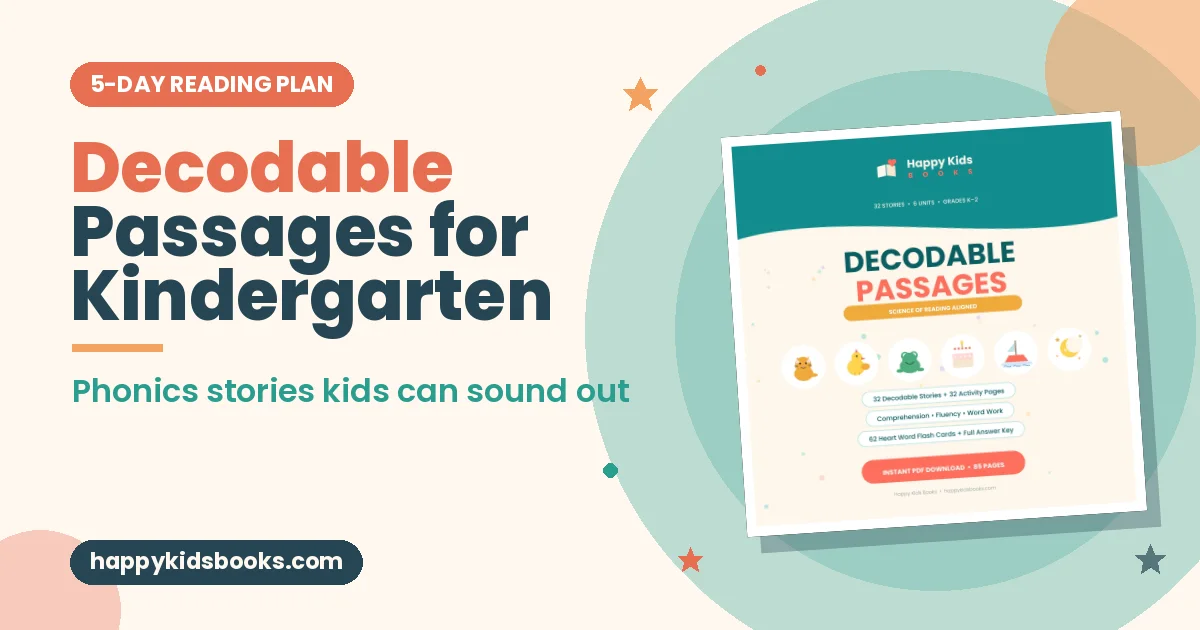
The Decodable Passages Pack (grades K to 2) has 32 science of reading stories that build in order, each with a comprehension page, plus heart word flash cards and a full answer key. One story a week covers most of the school year.
Tips for reading decodable passages with a 5 year old
- Cover the pictures on the first read so your child decodes instead of guessing.
- Point, do not tell. If they get stuck, point to the first letter and ask “what sound?” before giving the word.
- Praise effort, not speed. “You sounded out every letter” builds confidence.
- Stop at 10 minutes, even if it is going well.
- Keep reading aloud richer books at bedtime for vocabulary and fun.
How decodable passages fit with sight words
Decodable passages include a small number of high-frequency “heart words.” Practice these separately with games, then meet them again in the story. Our sight word games for kindergarten and kindergarten sight words list make that easy. Still at the very beginning? See how to teach a 4 year old to read.
Frequently asked questions
What are decodable passages for kindergarten?
They are short texts made of words a kindergartner can sound out using the phonics they have learned, mostly CVC words like cat and sun, plus a few common heart words.
When should a kindergartner start decodable passages?
Once your child knows several letter sounds and can blend three-letter words like s-a-t. Many children reach this point during the first half of kindergarten.
How often should my child read decodable passages?
About 10 minutes a day, rereading the same passage across the week. Repeated reading builds fluency and confidence.
Are decodable passages better than leveled readers?
For beginning readers practicing phonics, decodable texts let children read by sounding out instead of guessing. Leveled books and read-alouds are still valuable for vocabulary and enjoyment.
What if my child guesses words from the pictures?
Cover the pictures on the first read and point to the first letter of the word. Once the passage is decoded, uncover the pictures and talk about the story.
Start this week
Choose one short-vowel passage, practice four words on cards and read it together tonight. By Friday your child will read the whole story on their own, and that feeling is what makes readers.
Get new printables in your inbox
Join other parents getting new printable pages, freebies and simple at-home learning tips. No spam, unsubscribe anytime.